


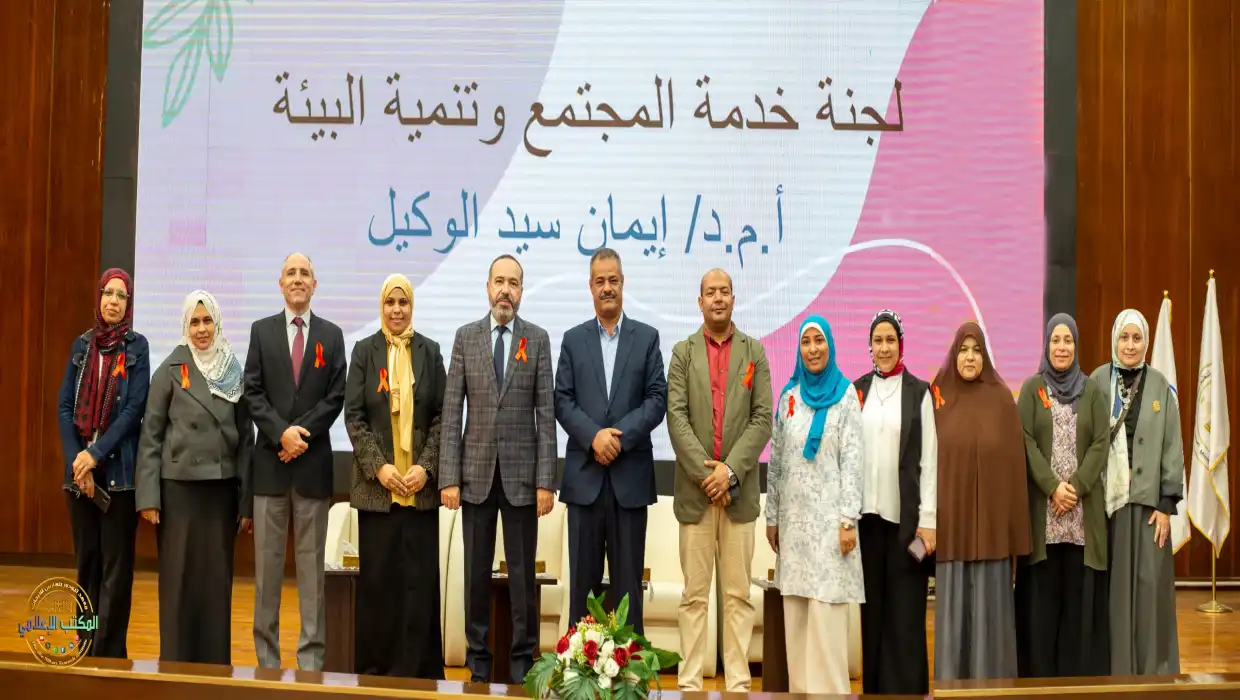
Theodor Bilharz Research Institute launches an awareness event on World AIDS Day, reaffirming its scientific commitment and social responsibility.
As part of the pioneering awareness role adopted by Theodor Bilharz Institute for Research, and in affirmation of its scientific and community mission to serve society, and under the patronage of Professor Dr. Ahmed Abdel Aziz, Director of the Institute and Chairman of the Board, the Community Service and Environmental Development Committee organized an extensive awareness event coinciding with World AIDS Day, which is on December 1st of each year. This was in implementation of the committee's strategy aimed at enhancing health awareness and solidifying the institute's role in disseminating scientific knowledge, with the presence of a selection of leaders and a number of attendees interested in health issues from various specialties.
The event was attended by Mr. Mohamed Abdel-Radi Hamdan, head of the Warraq district, clearly demonstrating the executive authorities' interest in partnering with research and medical institutions to support awareness efforts and enhance the institute's role in serving the community. Also Professor Dr. Omar Sabry, Secretary-General of the institute attended the event and a wide participation from research staff, doctors, nursing staff, technicians, administrators, and all institute employees, confirming the institution's commitment to raising health awareness and establishing sound scientific knowledge about the Human Immunodeficiency Virus (HIV) among all groups.
In his speech during the opening session, Prof. Dr. Ahmed Abdel Aziz, the director of the institute, stated that organizing these events falls within the institute's scientific and community responsibilities, explaining that the institute is committed to continuing its role in raising health awareness and providing accurate knowledge based on scientific research, and promoting a culture of prevention as the first pillar for protecting the community. He emphasized that the institute will continue to offer specialized awareness and training programs that serve the health of citizens and reinforce the institution's role as one of the leading scientific entities in serving the community.
The scientific day began with a speech by Dr. Eman El-Wakeel, Chair of the Community Service and Environmental Development Committee, who provided a comprehensive introduction to the committee's tasks and its role in implementing awareness initiatives, affirmed that the committee's work is based on a clear vision aimed at linking scientific research to community service and enhancing the awareness of workers and citizens regarding priority health issues.
The event featured a number of scientific lectures that addressed various aspects related to the human immunodeficiency virus. Dr. Dalia Salem, the assistant researcher in the Microbiology Department, delivered an extensive scientific explanation about the nature of the HIV virus. She reviewed its biological characteristics and how it is transmitted, discussed the symptoms associated with the infection and the potential health complications, and presented the latest globally and locally approved therapeutic protocols, highlighting the importance of early diagnosis to limit disease progression and improve treatment response rates.
This was followed by a lecture by Dr. Noha Hayek, a researcher in the Public Health Department, who addressed the epidemiological situation of the disease at both global and local levels, reviewing the history of the virus's discovery and its spread worldwide, while referencing the latest reports from the World Health Organization that show global infection trends. She also provided an analysis of the disease's situation in Egypt and the efforts made to prevent its spread, emphasizing the importance of community awareness in reducing new infection rates.
Dr. Shaimaa Shaker, the assistant researcher in the Department of Parasitology and the mental health specialist, gave a lecture in which she discussed the concept of psychological immunity and its role in combating the HIV virus, emphasizing that psychological support plays a pivotal role in improving patients' response to treatment and in reducing the negative effects of the psychological stress associated with the disease. She pointed out that awareness of the psychological aspect is an integral part of the comprehensive care system for patients.
Dr. Dina Eid Basher, a specialist in the Public Health Department and a member of the Infection Control Unit, in her lecture discussed prevention methods and ways to protect individuals and their families, explaining the pathways of virus spread within the community and how to reduce infection risks by adhering to proper preventive measures. She also explained the steps to be followed when suspecting contact with an infected case, whether inside healthcare facilities or in daily life, emphasizing the importance of rapid assessment and immediate preventive measures to limit the spread of the disease.
The lectures concluded with a presentation by Dr. Noha Mohamed, the research assistant in the Immunology Department and the member of the Clinical Nutrition Unit, who discussed the role of immunological nutrition in enhancing the ability of AIDS patients to resist the virus. She explained scientific dietary strategies that help strengthening the immune system and improving therapeutic outcomes. She explained that nutritional care is a fundamental element in supporting the quality of life of patients alongside medical treatment.
and thus, the event concluded, reaffirming the position of Theodor Bilharz Research Institute as a scientific institution committed to its educational role and its responsibility toward society, and supporting national efforts in combating diseases, ensuring that TBRI remains a pioneering model in integrating scientific research with social responsibility.
Recent News
Meta
- World AIDS day at TBRI